Originally published on DomusWeb
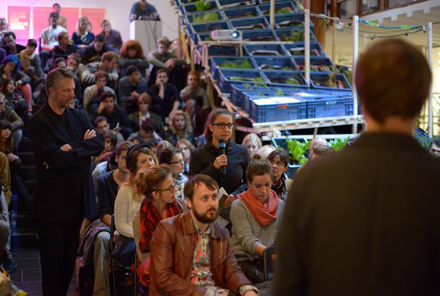
A casual visitor to Eindhoven last week would be forgiven for thinking that in the world of Dutch design, everything is business as usual. The attendance has continued to rise (this year, an expected 200,000 visitors), the number and diversity of events has grown, and every venue seemed to have its own elegant café, offering organic €7 sandwiches in a tasteful setting. Fresh-faced young graduates stood hopefully by their products, while last year’s bright young stars returned to show their work alongside the established set in repurposed old factories, the de facto galleries of choice in this once-industrial town, the home of the Philips light bulb.
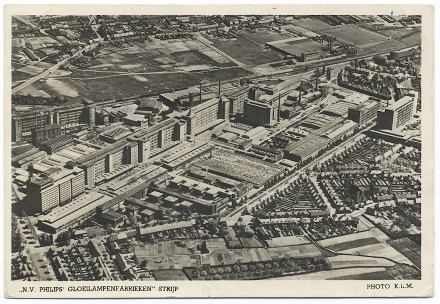
Philips Strijp-S factories in 1951
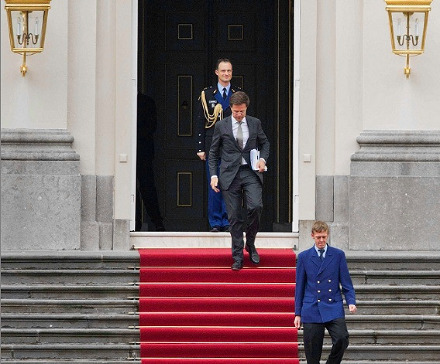
Yet this impression of artistic independence combined with a healthy commercial momentum disguises the political and financial upheavals taking place in the Netherlands over the past six months, which have had disastrous consequences on the infrastructure of Dutch design in terms of education, fabrication, and exhibition. In April 2012, the notorious Geert Wilders withdrew the support of his PVV party over austerity measures, necessitating the formation of a new coalition government, who agreed on budget cuts of €12 billion at the time (and another €16 billion last Friday), with huge impacts on the cultural sector.
In a national creative scene where money was no object for two decades (largely due to the political project of rebranding the country as a hotbed of creative intelligence rather than the home of legalised drugs and prostitution), the sudden emptying of the purses has raised enormous questions about the survival of Dutch design in its current form. This conflict is most obvious in the highly public restructuring of large institutions, such as the Design Academy Eindhoven (where all three heads of the masters program quit in July, only to be reinstated in August as chairwoman Anne-Mieke Eggenkamp announced her resignation), or the Netherlands Architecture Institute, Premsela, and Virtueel Platform, which will be absorbed into a single umbrella organization in January 2013. Besides these internationally recognised changes, however, there are equally potent consequences at smaller scales in the design world. Young independent designers have lost several sources of funding, while the instrumental centres for design research and material experimentation (including the European Ceramic Workcentre in Den Bosch and the Beeldenstorm metal foundry in Eindhoven) have seen their subsidies reduced.
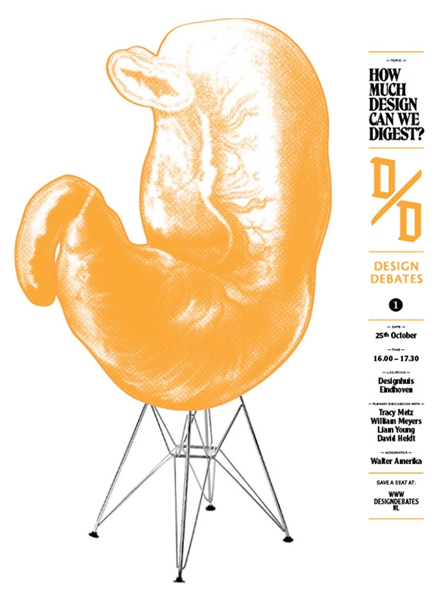
The new terms of the creative playing field imply the need to rethink what Dutch design should be about in the era of economic crisis, yet there is little evidence that this is happening. At the Designhuis, the tantalisingly-titled “How Much Design Can We Digest?” debate made almost no reference to the current financial context nor to the possible saturation of the market for conceptual design over the past 20 years. When asked about the impending twilight in the era of political pampering of design, some speakers claimed complete ignorance of the situation. Others, including writer William Meyers of the MoMA and futurist Liam Young of Tomorrow's Thoughts Today, responded that upheaval is good for design. They are correct, but they are not Dutch. They might be aware of the beautiful creations that have originated in this city, but perhaps they don’t realize that Dutch design’s deliberate elision of the mainstream market has for years rested atop a precarious house-of-cards of unpaid interns, anti-squat subsidized housing, aggressive international marketing, limited-edition pricing, and voracious gallerists. These speakers have, perhaps unknowingly, raised the challenge: after “form follows concept”, where is Dutch design going?
At the Design Academy Eindhoven, the centrepiece of the Dutch Design Week, most students are still being nursed on the dream of the independent studio practice, whose constraints are drawn only by their creative aspirations. A significant amount of the products on display could be characterised as metaphorical statements in material form, new takes on traditional techniques, or indulgences of personal fantasy, all of them operating on the premise that people will buy these things simply on account of their painstakingly-crafted beauty. Though some justify these creations on account of their well-intentioned therapeutic or environmental value, one must question why they need to be made in such expensive materials and in a way that discourages efficient manufacture.
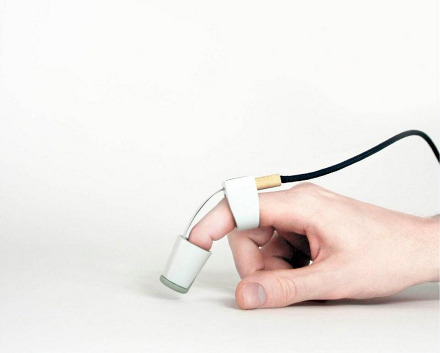
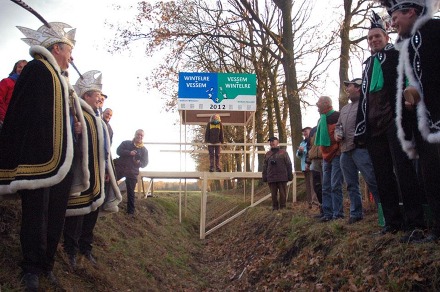
In this context, projects like Theo Brandwijk’s Piet, a sensor-equipped separation toilet for more efficient handling of human waste, display a commendable awareness of a context. Other projects do not claim to be necessary, but are hardly impoverished by the fact; Pieter-Jan Pieters makes musical instruments that allow for intuitive and improvisational playing, revelling in the freedom of digital technology while avoiding its tendency to standardise sound. Finally, Petra Hekkenberg’s design of a football pitch at the border between two competing villages is a reminder that design can still be humble, playful, socially-engaged, and (almost) free.
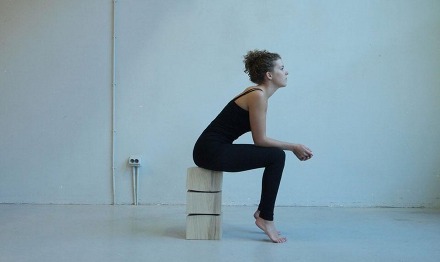
Meanwhile, in the warehouses of the Strijp district, prototypes give way to commercial enterprise. Piet Hein Eek’s vast territory combines department store, restaurant, and functioning factory; of all the local designers, his practice seems the least vulnerable to economic fluctuations, although robustness in Dutch design tends to be accompanied by a maturation (or slowing-down) from the youthful phase of imaginative experimentation. Still, under the aegis of his bustling factory, he gives the next generation a platform to display their work, including the camping table by AtelierKunstAlders, which fits water and gas tanks into an easily operated framework, or the wobbly Balancing stools by Rene Siebum, offering a subtle alternative to the bouncy rubber balls marketed to sedentary office workers.
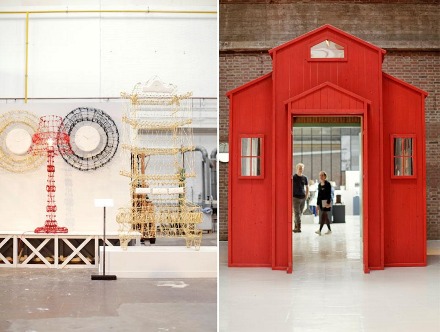
If the products at Piet Hein Eek’s emporium are, in theory, “affordable” (that is, assuming that a €300 stool is reasonable), then Kiki van Eijk and Joost van Bleiswijk at least make no pretense at either accessible price or function. In their enormous, airy warehouse, an accumulation of scratched-lacquer Delft Blau furniture, hollow glass tables, and knotted-wire grandfather clocks (€14,000) resemble theatre furniture more than any domestic item. One wonders at the audacity of the pricing given the picturesque display of the tools needed to make one of these clocks - a simple pair of pliers, and a healthy dose of patience. Still, not even the most jaded design veteran could fail to be amazed at their sewing machine cabinet of epic proportions, whose smooth unfolding calls to mind the hydraulic engineering of space shuttles. If the price (on demand) and usability of the cabinet are beyond the means of even the 1% of society, then they have a slightly more viable alternative in Wouter Scheublin’s similar, but smaller, design.
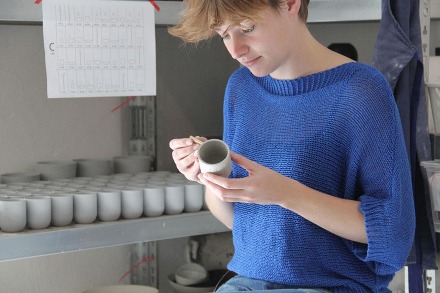
The ever-present price tags might seem somewhat crass, but they at least nod to the question of financial viability in a climate of European austerity. Across town, at Sectie-C, amidst industrial buildings mutated into cabins, hot tubs in converted skips, and impromptu barbecues around open wood-fires, the Objects for Sale exhibition offers what may be the week’s most direct acknowledgment of the economics of design. The exhibition brings together the work of eight designers, each offering their product in three iterations - under €50, €50-500, and over €500. In carefully tabulated forms, the designers account for the different costs involved in producing an object, reminding visitors of hidden costs, such as retail mark-ups, but also daring to put a price on concept. For example, in De Intuïtiefabriek’s SUM, a collection of different porcelain vessels is generated through variations in skilled labor, ornamentation, and even the amount of expensive cobalt blue pigment.
While Objects for Sale looks at the business of Dutch design, Atelier NL examine its personalities in a thoughtful installation called Curious Minds. Nadine Sterk and Lonny van Ryswyck incorporate data visualisation into all of their work, although usually the result takes the form of objects. In its current form, the project is a large information map that charts the career paths of Design Academy graduates from 2006 to 2011, stretching coloured threads over a large wooden space frame. For all of the discussion of the new designer as a collaborator or a connector, Curious Minds shows that an overwhelming majority of young designers still aspire to be independent designers - and, in 2011, more than ever. Atelier NL seem to be asking a simple question, but one that is difficult to answer: if the era of the independent designer is no longer possible for the new graduate, what other model do they have to incorporate themselves into a system of conceptual research and creative making? If we take this year’s Dutch Design Week as an indication, then the light bulb moment is still to come.
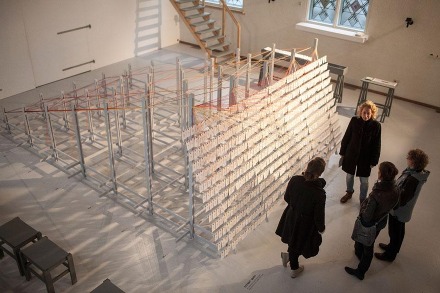
Photo by Mike Roelofs
The new terms of the creative playing field imply the need to rethink what Dutch design should be about in the era of economic crisis, yet there is little evidence that this is happening: at this year's Dutch Design Week, everything was business as usual.
A casual visitor to Eindhoven last week would be forgiven for thinking that in the world of Dutch design, everything is business as usual. The attendance has continued to rise (this year, an expected 200,000 visitors), the number and diversity of events has grown, and every venue seemed to have its own elegant café, offering organic €7 sandwiches in a tasteful setting. Fresh-faced young graduates stood hopefully by their products, while last year’s bright young stars returned to show their work alongside the established set in repurposed old factories, the de facto galleries of choice in this once-industrial town, the home of the Philips light bulb.
Philips Strijp-S factories in 1951
Yet this impression of artistic independence combined with a healthy commercial momentum disguises the political and financial upheavals taking place in the Netherlands over the past six months, which have had disastrous consequences on the infrastructure of Dutch design in terms of education, fabrication, and exhibition. In April 2012, the notorious Geert Wilders withdrew the support of his PVV party over austerity measures, necessitating the formation of a new coalition government, who agreed on budget cuts of €12 billion at the time (and another €16 billion last Friday), with huge impacts on the cultural sector.
In a national creative scene where money was no object for two decades (largely due to the political project of rebranding the country as a hotbed of creative intelligence rather than the home of legalised drugs and prostitution), the sudden emptying of the purses has raised enormous questions about the survival of Dutch design in its current form. This conflict is most obvious in the highly public restructuring of large institutions, such as the Design Academy Eindhoven (where all three heads of the masters program quit in July, only to be reinstated in August as chairwoman Anne-Mieke Eggenkamp announced her resignation), or the Netherlands Architecture Institute, Premsela, and Virtueel Platform, which will be absorbed into a single umbrella organization in January 2013. Besides these internationally recognised changes, however, there are equally potent consequences at smaller scales in the design world. Young independent designers have lost several sources of funding, while the instrumental centres for design research and material experimentation (including the European Ceramic Workcentre in Den Bosch and the Beeldenstorm metal foundry in Eindhoven) have seen their subsidies reduced.
The new terms of the creative playing field imply the need to rethink what Dutch design should be about in the era of economic crisis, yet there is little evidence that this is happening. At the Designhuis, the tantalisingly-titled “How Much Design Can We Digest?” debate made almost no reference to the current financial context nor to the possible saturation of the market for conceptual design over the past 20 years. When asked about the impending twilight in the era of political pampering of design, some speakers claimed complete ignorance of the situation. Others, including writer William Meyers of the MoMA and futurist Liam Young of Tomorrow's Thoughts Today, responded that upheaval is good for design. They are correct, but they are not Dutch. They might be aware of the beautiful creations that have originated in this city, but perhaps they don’t realize that Dutch design’s deliberate elision of the mainstream market has for years rested atop a precarious house-of-cards of unpaid interns, anti-squat subsidized housing, aggressive international marketing, limited-edition pricing, and voracious gallerists. These speakers have, perhaps unknowingly, raised the challenge: after “form follows concept”, where is Dutch design going?
At the Design Academy Eindhoven, the centrepiece of the Dutch Design Week, most students are still being nursed on the dream of the independent studio practice, whose constraints are drawn only by their creative aspirations. A significant amount of the products on display could be characterised as metaphorical statements in material form, new takes on traditional techniques, or indulgences of personal fantasy, all of them operating on the premise that people will buy these things simply on account of their painstakingly-crafted beauty. Though some justify these creations on account of their well-intentioned therapeutic or environmental value, one must question why they need to be made in such expensive materials and in a way that discourages efficient manufacture.
In this context, projects like Theo Brandwijk’s Piet, a sensor-equipped separation toilet for more efficient handling of human waste, display a commendable awareness of a context. Other projects do not claim to be necessary, but are hardly impoverished by the fact; Pieter-Jan Pieters makes musical instruments that allow for intuitive and improvisational playing, revelling in the freedom of digital technology while avoiding its tendency to standardise sound. Finally, Petra Hekkenberg’s design of a football pitch at the border between two competing villages is a reminder that design can still be humble, playful, socially-engaged, and (almost) free.
Meanwhile, in the warehouses of the Strijp district, prototypes give way to commercial enterprise. Piet Hein Eek’s vast territory combines department store, restaurant, and functioning factory; of all the local designers, his practice seems the least vulnerable to economic fluctuations, although robustness in Dutch design tends to be accompanied by a maturation (or slowing-down) from the youthful phase of imaginative experimentation. Still, under the aegis of his bustling factory, he gives the next generation a platform to display their work, including the camping table by AtelierKunstAlders, which fits water and gas tanks into an easily operated framework, or the wobbly Balancing stools by Rene Siebum, offering a subtle alternative to the bouncy rubber balls marketed to sedentary office workers.
If the products at Piet Hein Eek’s emporium are, in theory, “affordable” (that is, assuming that a €300 stool is reasonable), then Kiki van Eijk and Joost van Bleiswijk at least make no pretense at either accessible price or function. In their enormous, airy warehouse, an accumulation of scratched-lacquer Delft Blau furniture, hollow glass tables, and knotted-wire grandfather clocks (€14,000) resemble theatre furniture more than any domestic item. One wonders at the audacity of the pricing given the picturesque display of the tools needed to make one of these clocks - a simple pair of pliers, and a healthy dose of patience. Still, not even the most jaded design veteran could fail to be amazed at their sewing machine cabinet of epic proportions, whose smooth unfolding calls to mind the hydraulic engineering of space shuttles. If the price (on demand) and usability of the cabinet are beyond the means of even the 1% of society, then they have a slightly more viable alternative in Wouter Scheublin’s similar, but smaller, design.
The ever-present price tags might seem somewhat crass, but they at least nod to the question of financial viability in a climate of European austerity. Across town, at Sectie-C, amidst industrial buildings mutated into cabins, hot tubs in converted skips, and impromptu barbecues around open wood-fires, the Objects for Sale exhibition offers what may be the week’s most direct acknowledgment of the economics of design. The exhibition brings together the work of eight designers, each offering their product in three iterations - under €50, €50-500, and over €500. In carefully tabulated forms, the designers account for the different costs involved in producing an object, reminding visitors of hidden costs, such as retail mark-ups, but also daring to put a price on concept. For example, in De Intuïtiefabriek’s SUM, a collection of different porcelain vessels is generated through variations in skilled labor, ornamentation, and even the amount of expensive cobalt blue pigment.
While Objects for Sale looks at the business of Dutch design, Atelier NL examine its personalities in a thoughtful installation called Curious Minds. Nadine Sterk and Lonny van Ryswyck incorporate data visualisation into all of their work, although usually the result takes the form of objects. In its current form, the project is a large information map that charts the career paths of Design Academy graduates from 2006 to 2011, stretching coloured threads over a large wooden space frame. For all of the discussion of the new designer as a collaborator or a connector, Curious Minds shows that an overwhelming majority of young designers still aspire to be independent designers - and, in 2011, more than ever. Atelier NL seem to be asking a simple question, but one that is difficult to answer: if the era of the independent designer is no longer possible for the new graduate, what other model do they have to incorporate themselves into a system of conceptual research and creative making? If we take this year’s Dutch Design Week as an indication, then the light bulb moment is still to come.
Photo by Mike Roelofs